Manual welding
Very low volumes and awkward joints
Repairs, one-off joints the torch cannot reach and shops with enough skilled welders.
 STEEL WELDING ROBOTS
Welding automation guide
There are three ways to weld structural steel: skilled welders, a collaborative robot (cobot) at a welding table, or an industrial robot on a rail or cantilever. Which one pays off depends on the size of your parts, your volumes and how many welders you can hire.
Manual welding
Repairs, one-off joints the torch cannot reach and shops with enough skilled welders.
Cobot welding
Brackets, plates and short sub-assemblies in small batches, taught by hand.
Industrial robot station
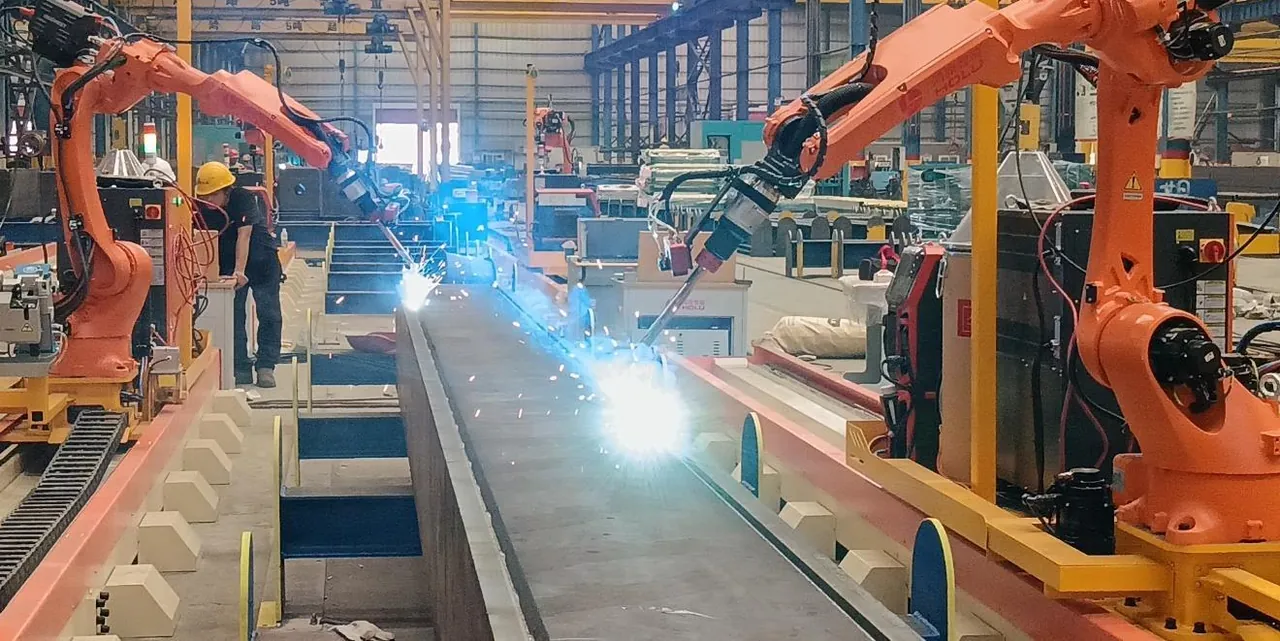
Members several metres long, steady volumes and shops that cannot hire enough welders.
| Compare | Manual welding | Cobot welding | Our robot stations |
|---|---|---|---|
| Part size | Any size | Parts within the arm’s reach at a table | Members up to 1,500 mm wide on a 12 m rail; plates up to 3,500 mm wide |
| Programming | None — the welder decides | Each new part taught by hand-guiding the arm | Teachless: paths planned from the 3D model |
| Output | Depends on the welder | Limited by teaching time and collaborative speeds | Typically 70–120 m of weld per robot per day shift |
| Staffing | One welder per torch | An operator to teach, load and supervise | One operator runs 3–6 stations |
| Skills needed | Qualified welders | An operator who can teach the cobot | Operators proficient in 1–5 days |
| Consistency | Varies from welder to welder | Repeatable once taught | Every seam scanned before welding; process library |
| Working area | Welding booth and PPE | Designed to work near people, after a risk assessment | A dedicated station area |
Cobot figures describe typical collaborative welding cells in general, not a specific product.
Manual welding needs no investment and handles any joint a welder can reach. It still makes sense for repairs, rare one-off parts and very tight joints.
The limits are people and consistency: output grows only by hiring, skilled welders are hard to find, and quality varies from welder to welder. Even in a robot shop, welders stay useful for special welds and touch-ups.
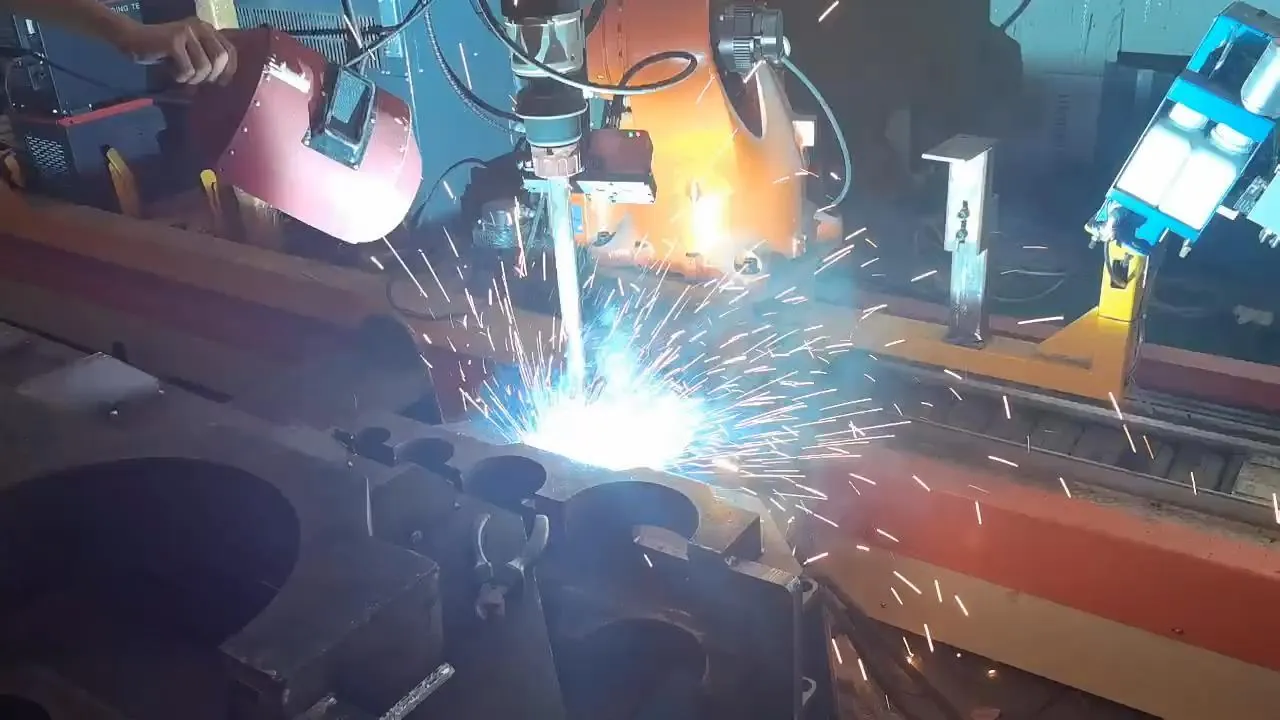
A cobot is a small robot arm designed to work near people. The operator teaches each part by guiding the arm by hand, so it is quick to set up for a new batch of small parts.
It suits brackets, plates and short sub-assemblies that fit on a welding table. For structural steel, its limits are reach and teaching time: long members do not fit on the table, and every new beam has to be taught.
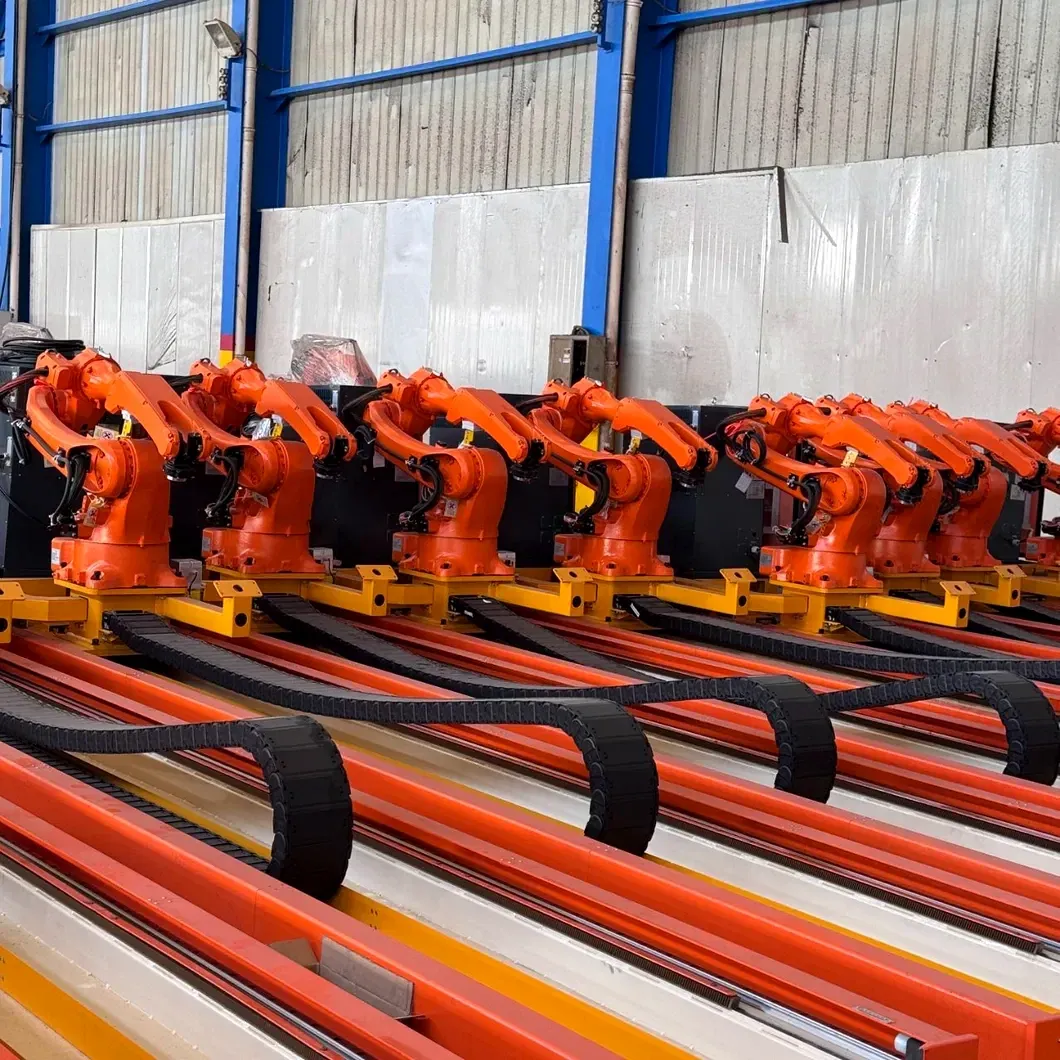
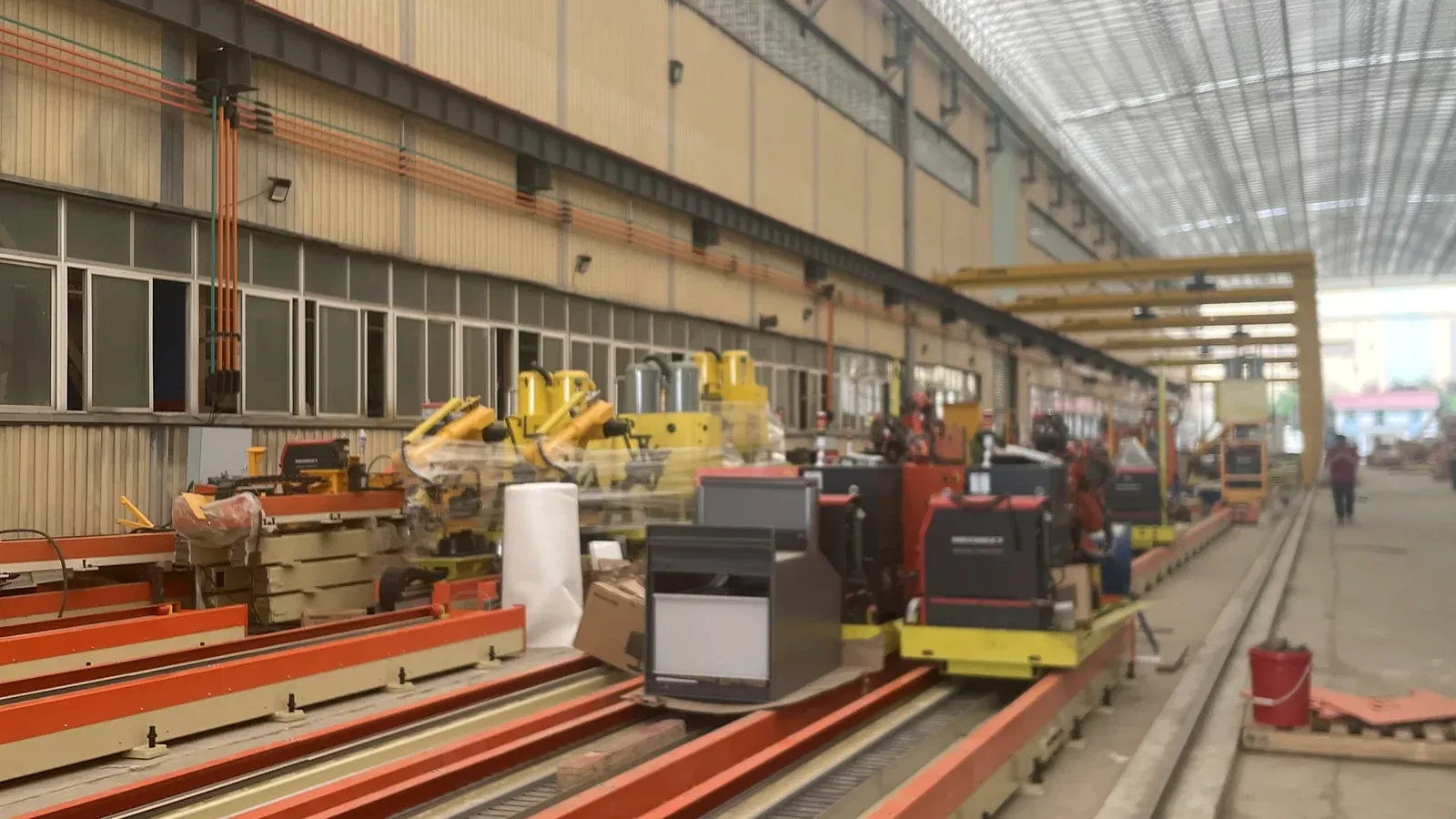
A robot on a travelling rail or cantilever reaches the whole member or plate, however long. With teachless programming, one-off parts need no teaching at all.
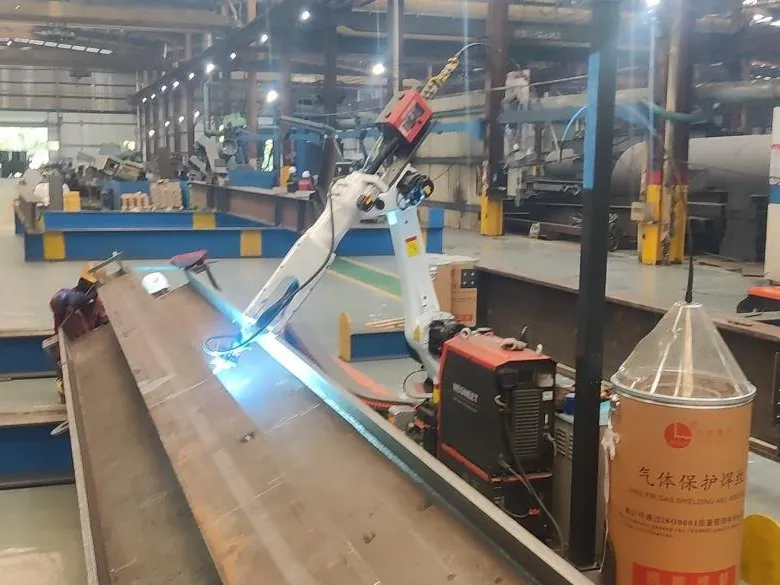
In structural steel almost every member is different. If each new beam has to be taught — by pendant or by hand-guiding — teaching can take longer than welding, and the robot sits idle.
Our stations plan weld paths from the STEP or IFC model instead, check them for collisions and scan each seam before welding. That is what makes one-off steel work economical to automate.
A cobot costs less to buy than a full robot station, and manual welding costs nothing up front. The fair comparison is the cost of each metre of weld on your parts: equipment, labour, teaching time and rework over several years.
Send us your parts and volumes and we help you compare the options with your own figures.
Common questions from fabricators weighing up welding automation.
To buy, usually yes. Per metre of weld on long structural members, not necessarily: compare what each option welds per shift on your parts and how much teaching it needs.
Short sections and small parts on a table, yes. Long members exceed a cobot’s reach, and every new member has to be taught.
It changes their job. Welders become operators — one runs 3–6 stations — and still handle special welds and touch-ups.
Operators become proficient on our stations in 1–5 days. No robot programming skills are needed.
Send a drawing, model or photo of a typical part. Our engineers tell you which welds a robot can take and recommend a station — free of charge. We reply within one business day.
Or email [email protected]