
No teach programming
Import a STEP or IFC model, for example from Tekla. The software finds the welds, plans the path and checks it for collisions.
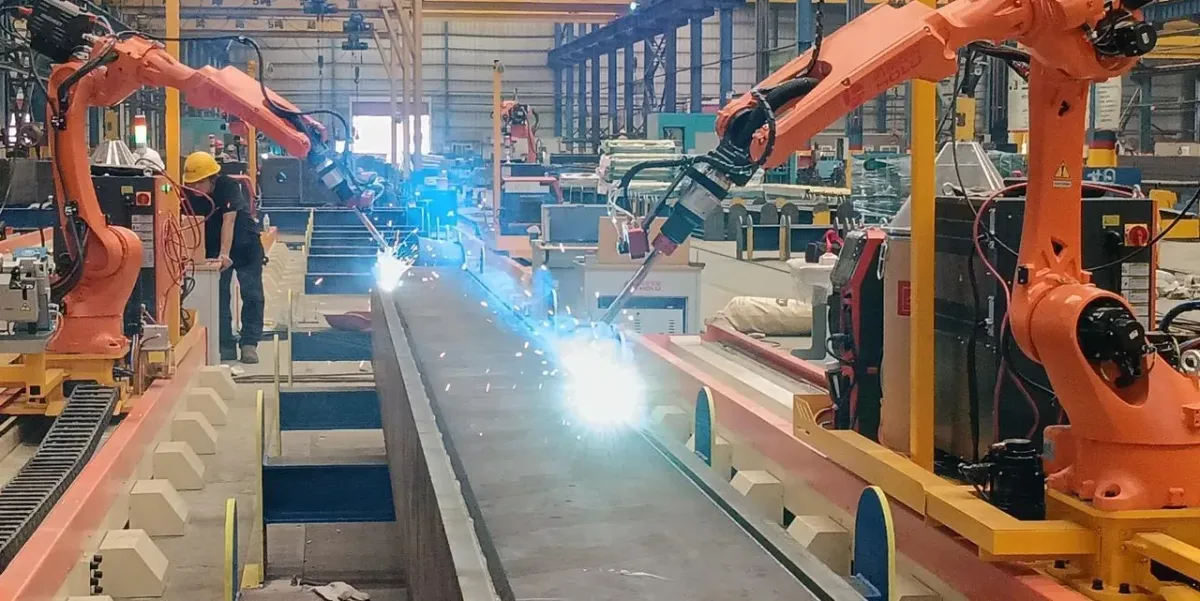
H-beam welding robot
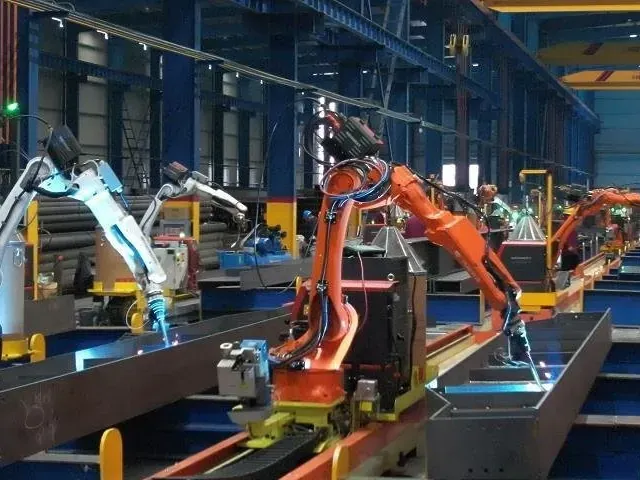
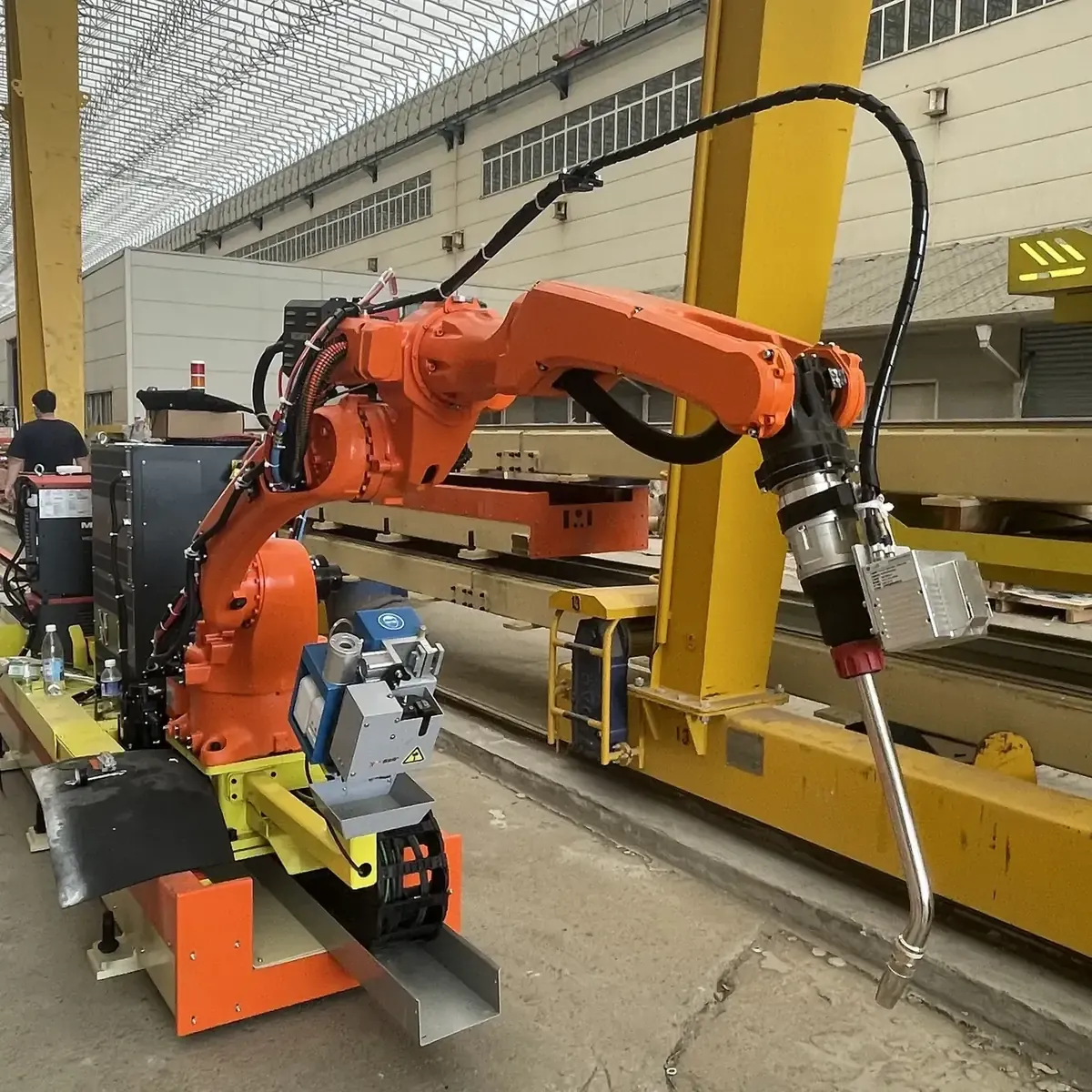
A complete 7-axis welding robot system for structural steel: it welds H-beams (I-beams), columns, crane runway beams and the stiffeners, end plates, corbels and cleats fitted to them — programmed from your 3D model, not taught point by point.
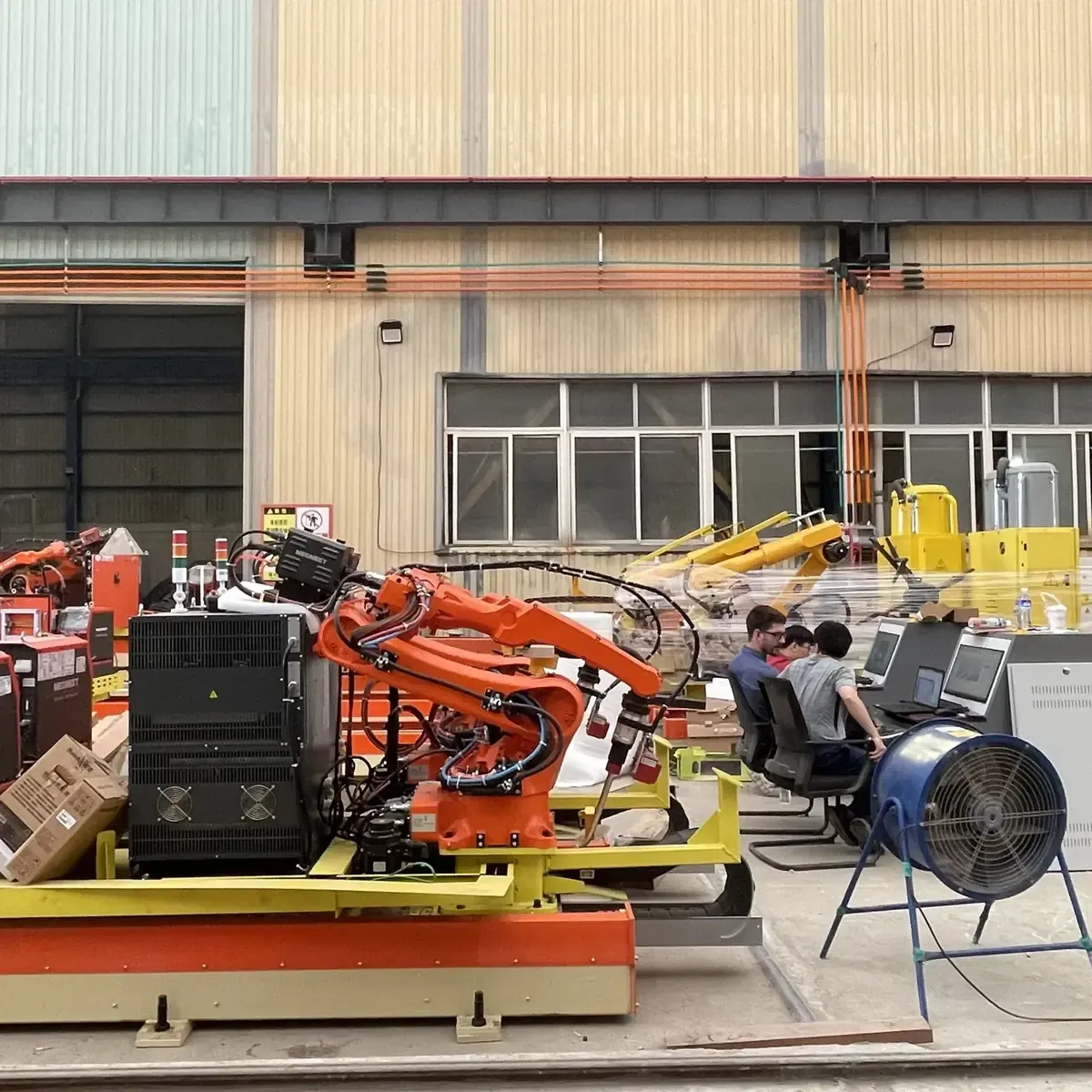
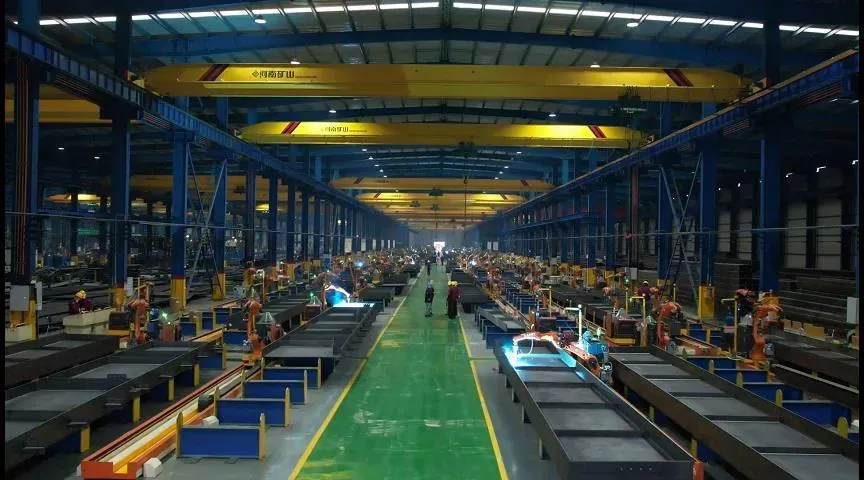
Built by a structural steel fabricator whose own plants run 2,000+ of our welding robots.
Import a STEP or IFC model, for example from Tekla. The software finds the welds, plans the path and checks it for collisions.
A laser line scan finds where the part lies on the station, so welding can typically begin 2–3 minutes after loading.
One operator runs 3–6 stations, and each robot welds 70–120 m per day shift.
Every seam is scanned before welding, parameters come from a structural steel process library, and the welded length is logged.
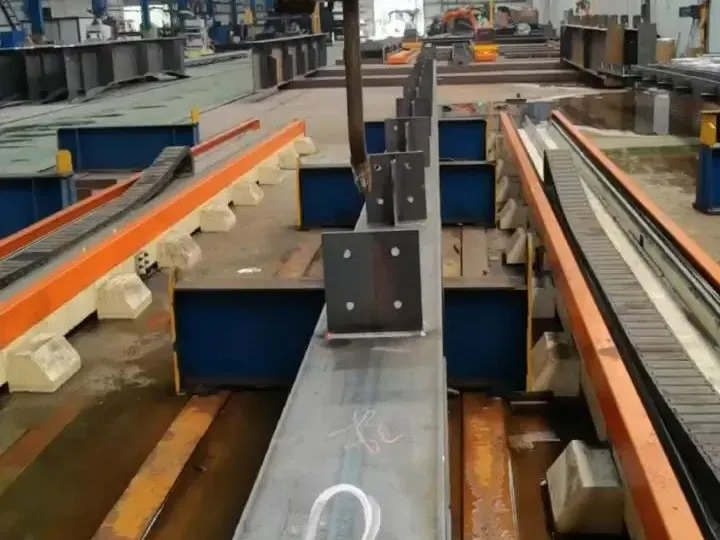
Open structural steel members where the torch can reach the joint from the side or from above.
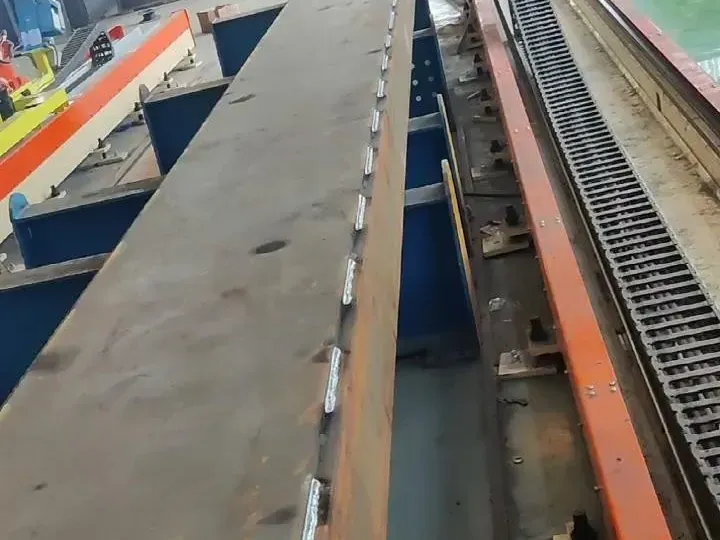
Compared with an H-beam (I-beam) welding machine: a conventional gantry machine welds the long flange-to-web seams of straight beams. The 7-axis robot welds the assembled member — stiffeners, end plates, corbels and cleats — with straight, polyline, curved and vertical fillet welds.
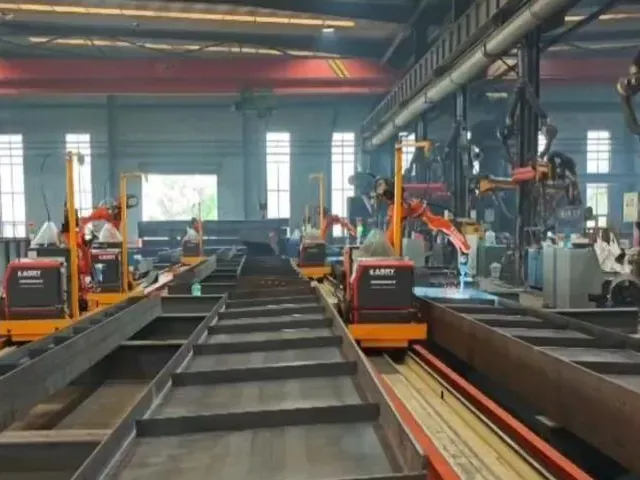
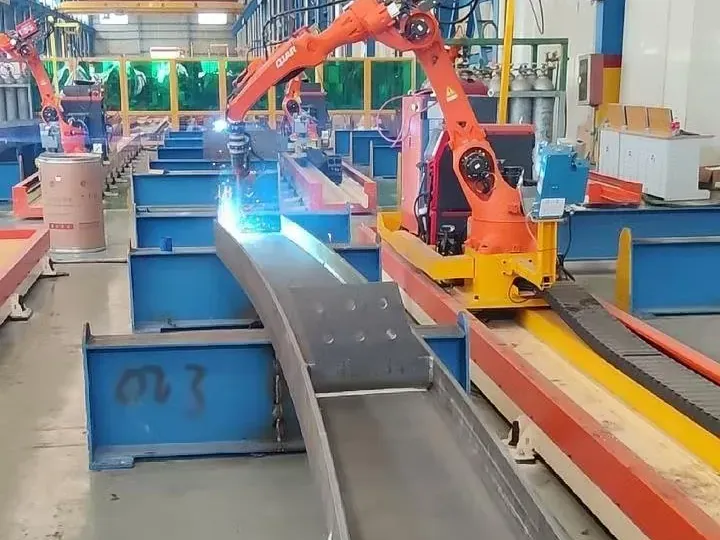
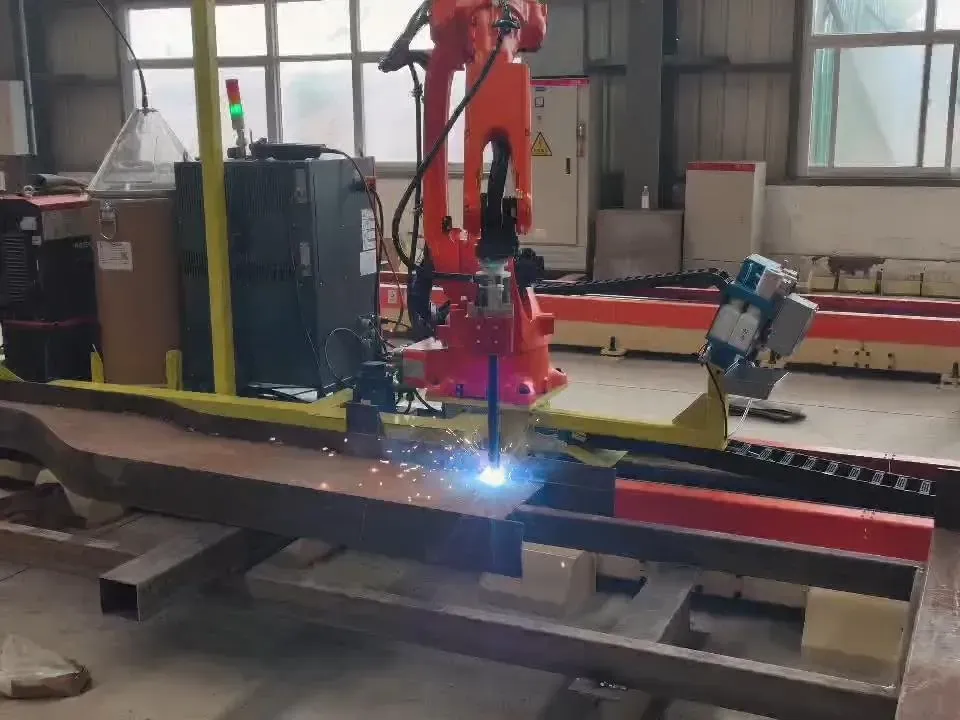
Robotic welding for beams and columnsRead how an H-beam welding line divides the work
Standard configuration of the 7-axis rail-mounted welding workstation.
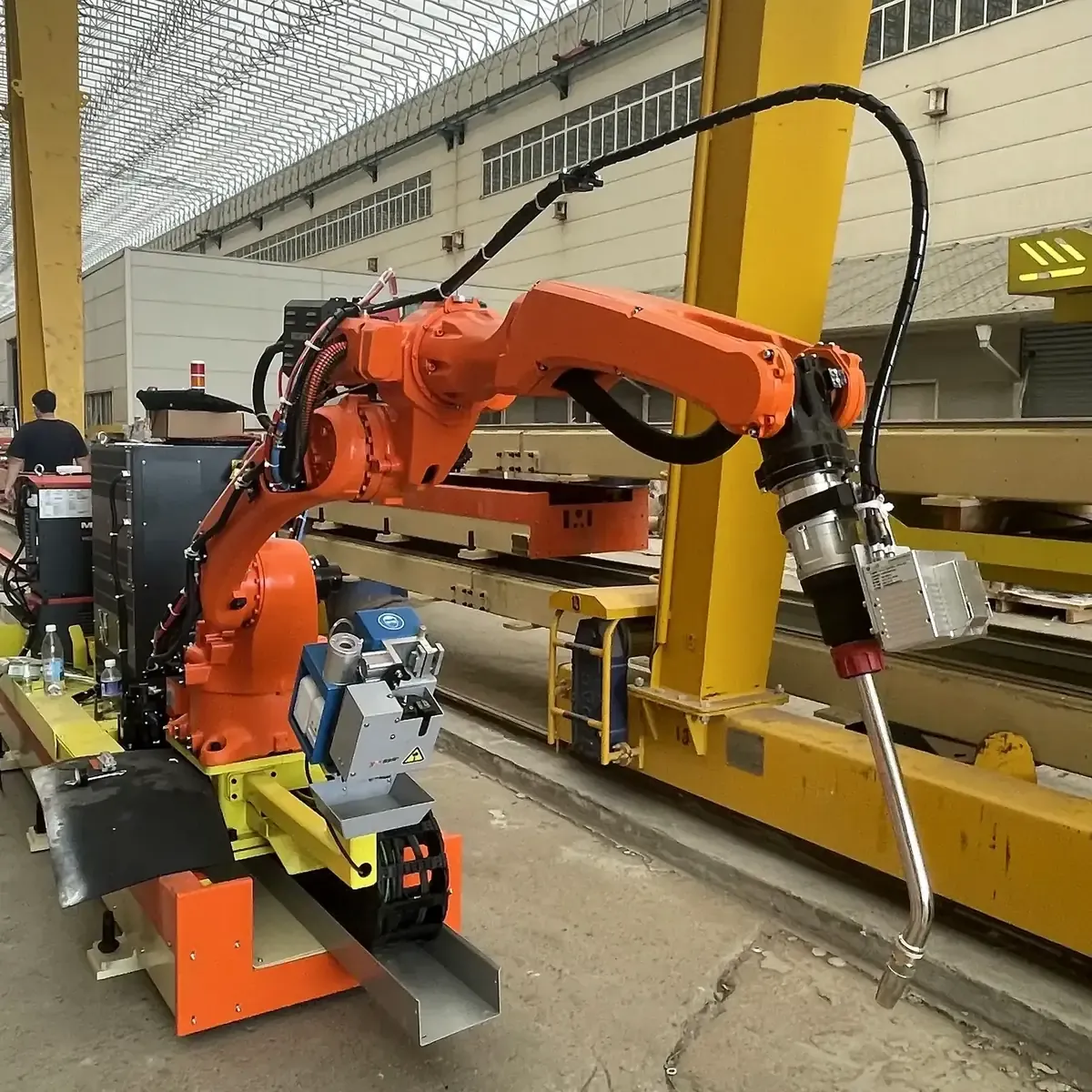
| Item | 7-Axis Rail-Mounted Welding Robot |
|---|---|
| Workpiece width | Up to 1,500 mm |
| Ground rail length (standard) | 12 m |
| Effective travel (standard) | 10.63 m |
| Robot reach | 2,014 mm |
| Robot payload | 6 kg |
| Robot repeatability | ±0.08 mm |
| Welding process | GMAW: CO₂ / MAG / MIG, DC and pulse |
| Welding torch | Water-cooled, up to 500 A |
| Welding positions | Flat (PA), horizontal fillet (PB), vertical down (PG) |
| Weld types | Straight, polyline, curved and vertical fillet welds; lap and wrap-around welds; intermittent welds on straight seams |
| 3D model import | STEP, IFC |
| Programming | Teachless from the 3D model; scan-based modelling for flat web plates with stiffeners; simple teach mode for special welds |
| Staffing | One operator runs 3–6 stations |
| Material | Carbon structural steel |
A complete 7-axis welding workstation for steel structures, supplied as one system:
Scan the QR code on the part label, or open the STEP or IFC model from Tekla or other detailing software.
The software extracts the welds, takes parameters from the process library, plans the path and checks it for collisions.
A laser line scan finds where the part lies on the station and matches it to the model.
Before each weld the robot scans the seam to locate it, then welds with arc tracking.
The welded length is logged for each part and can be reported to your ERP or MES (optional).
Use the full suitability checklist
The angle between part plates should be ≥70°. When stiffeners and flanges are 200 mm high, leave at least 200 mm between stiffeners.
Free part evaluation. Send a drawing, model or photo of a typical part. Our engineers check the welds and recommend a station and quotation. We reply within one business day.
Watch or try it. Book a live video tour of our production, or visit our factory in Hefei and operate the robot yourself before you order.
Delivery and training. Operators learn to run the station in 1–5 days. On-site commissioning and training at your workshop can be arranged; the cost is listed in your quotation.
Tell us what you weld. Drawings and models are welcome but not required to start.
Prefer email? sales@steelweldingrobot.com
Common questions from fabricators comparing H-beam welding robots.
The robot arm itself has six axes. On our 7-axis station the seventh axis is the travelling ground rail that carries the arm along the steel member, so one robot can weld beams and columns along 10.63 m of travel on the standard 12 m rail.
The price depends on rail length, the number of robots on the rail, the welding package and software options. We quote factory-direct after a free review of your parts.
Yes, for flat web plates with stiffeners: the station scans the part and builds the model itself. Other parts need a STEP or IFC model. You do not need a model to send a first inquiry.
Operators learn to run the station in 1–5 days, and training uses your own parts.
Yes. Twin-robot layouts put two robots on one rail for long members. We recommend the number of robots from your part lengths and volumes. Software and hardware protection prevent the two robots from colliding.
Not always. Stiffeners, brackets and torch angle decide access. Simple teach mode covers special welds, and welds the robot cannot reach are finished by hand. Our free evaluation shows which welds the robot takes.
Yes. On-site commissioning and operator training at your workshop can be arranged; the cost is listed in your quotation. Our engineers also support your team remotely.
Yes. We are part of a Chinese structural steel fabricator that builds and uses these robots, and we sell factory-direct. See them on a live video tour or visit our plants; we pick you up at the airport or station.