
Buying a welding robot
How to Choose a Steel Structure Welding Robot Supplier: A Checklist
Choosing a steel structure welding robot supplier starts with your parts, welds and production routine. Use these eight checks to compare how a manufacturer evaluates the work, prepares new parts and supports your operators.
1. Is the Robot Proven in Structural Steel Production?
Ask where the supplier’s robots weld real beams, columns and fittings in daily production. The useful question is how the station handles the parts and joints you make, rather than whether a robot can draw a weld on a demonstration piece.
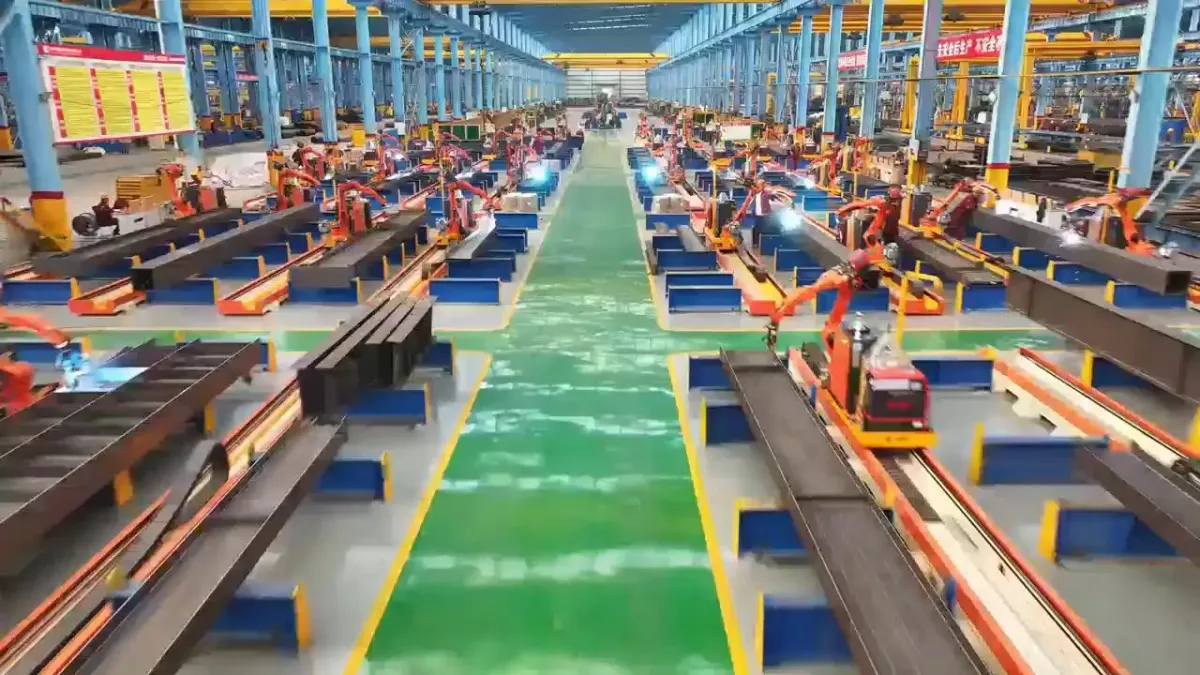
Our parent company’s steel plants run 2,000+ of our welding robots every day. Start the discussion with your typical members and the welds that take the most manual work.
2. Can It Weld One-Off Parts Without Teach Programming?
Ask how a new part moves from a model to a welding path. Structural steel work often involves one-off parts and small batches; preparing each seam by teaching the robot can add work whenever the geometry changes.
Our teachless software imports STEP / IFC models, finds the welds, plans paths and checks collisions. Review the model-based workflow and ask to see it applied to the parts you want to automate.
3. Will They Check Your Parts Before Quoting?
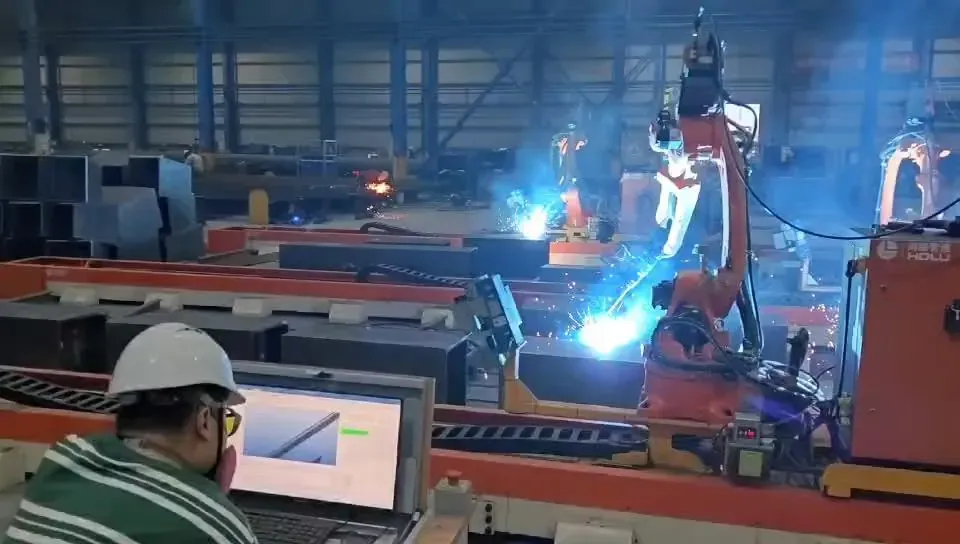
Ask the supplier to review weld access, member dimensions and your part mix before recommending a station. A drawing or photograph helps focus the discussion on the actual work and the joints the torch needs to reach.
We offer a free part evaluation and reply within one business day. Send drawings, models or photos with weld details; the suitability checklist explains what to prepare.
4. Can You See It Working First?
Ask to watch the robot weld and to discuss the operating steps with the team. Seeing loading, model preparation and welding together helps you judge how the station would fit your workshop, beyond the finished weld alone.
You can book a live video tour or visit our factory and operate a robot before ordering. Bring your part questions so the visit centres on the work you plan to automate.
5. Does the Layout Fit Your Parts?
Ask which layout reaches your joints and how parts will be loaded and removed. Long beams, wide flat assemblies and full-penetration joints call for different equipment; extra axes should serve the part geometry and weld access.
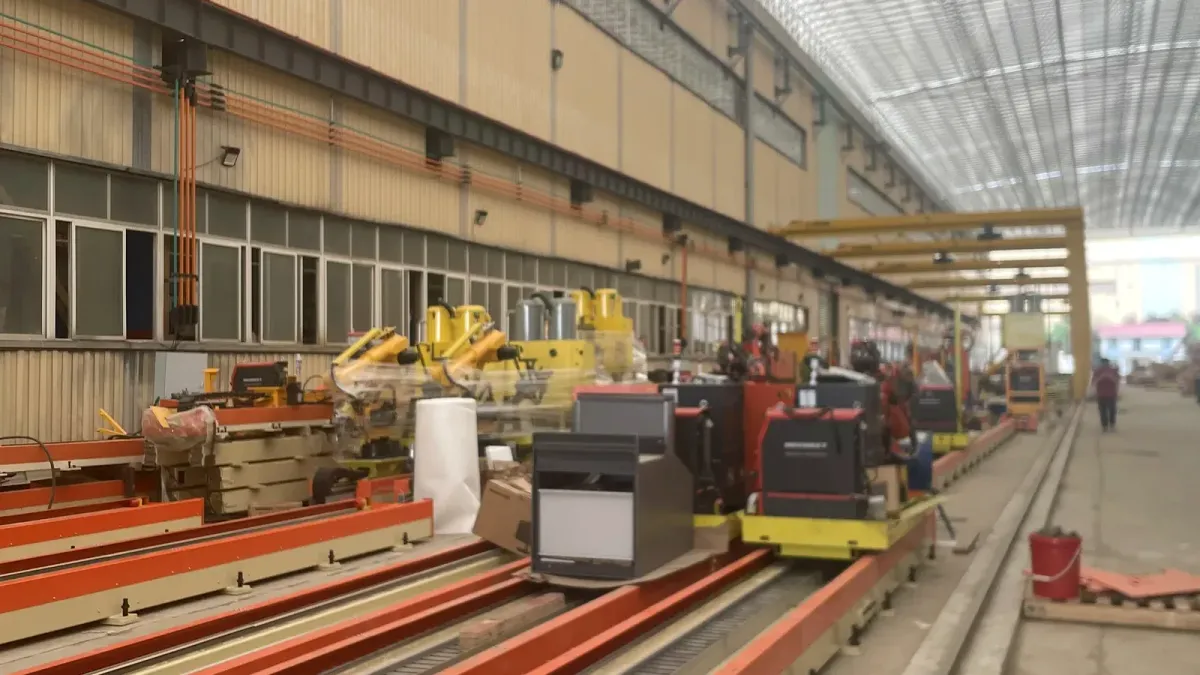
Our rail-mounted layout serves beams and columns; the cantilever suits wide, flat assemblies. Gantry layouts and submerged arc stations address different production tasks, with submerged arc used for full-penetration joints. Compare the layouts and axis configurations with your part list.
6. How Long Until Operators Are Productive?
Ask what operators learn and which parts they practise on. Training should cover the daily work your team will perform, so discuss model preparation, station operation and the move from one part to the next.
Your operators learn to run the station in 1–5 days, training on your own parts. Include the people who will run the station when planning the training and factory visit.
7. What Support and Spare Parts Come After Start-Up?
Ask who helps your operators after commissioning, how remote support works and which spare parts are recommended. Including these items in the quotation gives your production team a clear starting point for operating and maintaining the station.
Our engineers support your team remotely. On-site installation and commissioning is an optional service, quoted separately, and recommended spare parts are listed in the quotation. Read about training, support and spare parts.
8. Can You Compare Quotations Like-for-Like?
Ask each supplier to state the complete station scope, rather than comparing the robot arm alone. Travel, robot count, welding package, vision, software, shipping and commissioning all belong in the comparison.
We quote factory-direct after reviewing your parts. Use the quotation checklist to compare the same work and options, with freight, import duties and optional on-site service considered separately.
Questions to Take to Your Supplier
| Check | Ask the supplier |
|---|---|
| Production | Where does the robot weld structural steel in daily use? |
| Software | How does a new STEP / IFC model become a weld path? |
| Evaluation | Will you review our parts and torch access before quoting? |
| Seeing it work | Can we watch production and try the operating steps? |
| Layout | How will the station reach, load and unload our parts? |
| Training | What will operators practise on our own parts? |
| Support | Who supports us, and which spare parts are recommended? |
| Quotation | What station, shipping and service items are listed? |
Supplier Selection Questions
What should we send a welding robot manufacturer first?
Send drawings, STEP / IFC models or photos of typical parts, with dimensions and weld details. Explain the joints you want to automate and your existing workshop equipment.
Can we compare suppliers before choosing a layout?
Yes. Start with the same part list and weld requirements for each supplier. Ask each to explain its layout recommendation, then compare the equipment and services included.
Can we see the robot before placing an order?
You can book a live video tour or visit our factory and operate a robot. Use the session to discuss your parts, software workflow and operator training.
How do we request a quotation?
Send your project information for a free part review. Our engineers reply within one business day and recommend the station scope for your production.
Start With Your Parts
Send the members and welds you want to automate. Our engineers review your parts for free and help you plan the station, training and support.