
Different buildings, model-based paths
Import the assembled model and the software finds the welds, plans paths and checks for collisions. Operators do not teach points for every new member.
Pre-engineered steel buildings
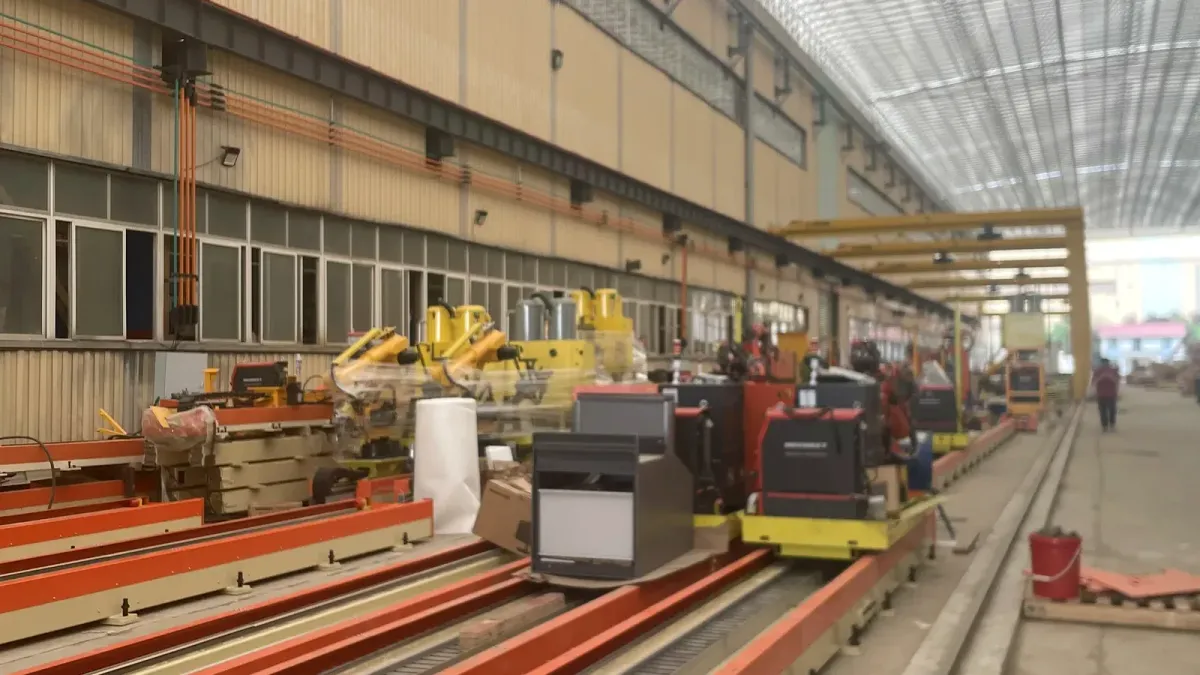
Each pre-engineered building has its own columns, rafters and connection details. Your H-beam line welds the main flange-to-web seams, but the stiffeners, end plates and purlin cleats are often still welded by hand. Our PEB welding machine takes these fittings from your 3D model and welds them with a rail-mounted robot.
Import the assembled model and the software finds the welds, plans paths and checks for collisions. Operators do not teach points for every new member.
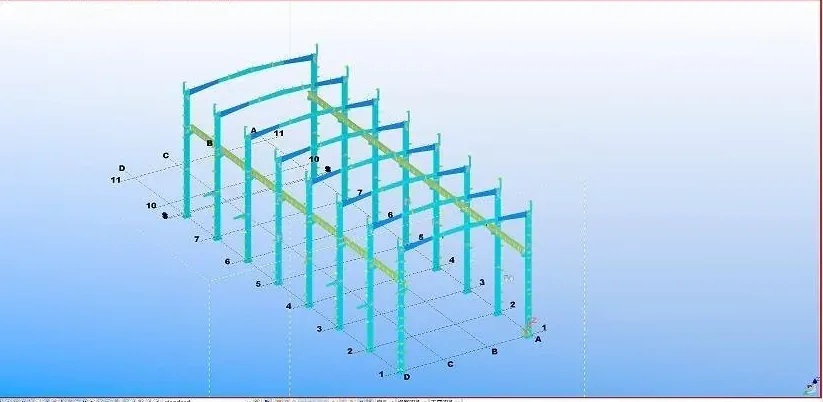
The changing depth of a column or rafter is part of its geometry. The model describes the member and the position of each fitting.
The robot travels along the ground rail to reach the stiffeners, end plates, cleats and brackets fitted along the member.
Operators load parts, start jobs and check results. Welders can concentrate on special joints and touch-ups.
A portal frame combines columns and rafters with connection plates and secondary fittings. Start with the members you produce most often, including the crowded connections that take the longest to weld by hand.
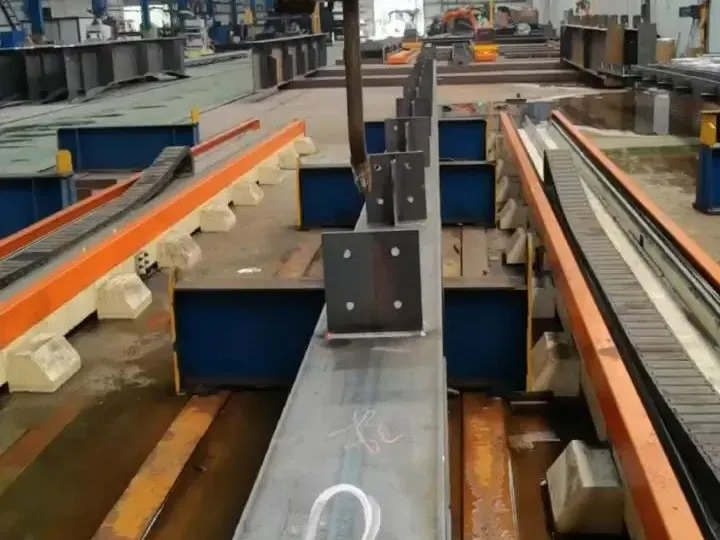
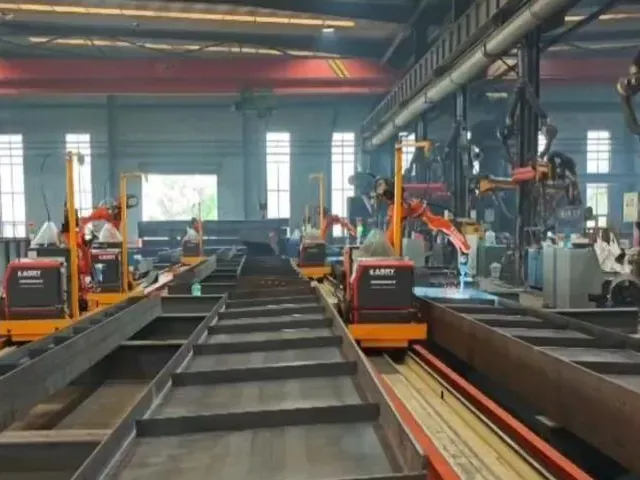
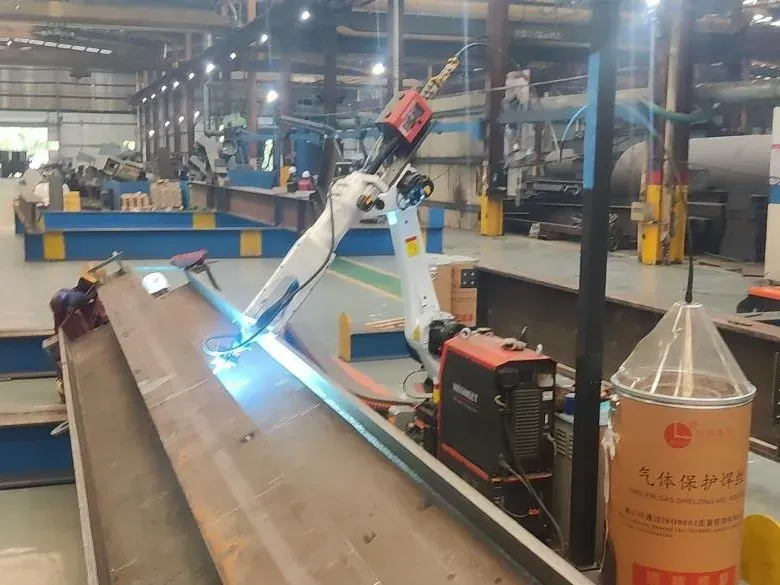
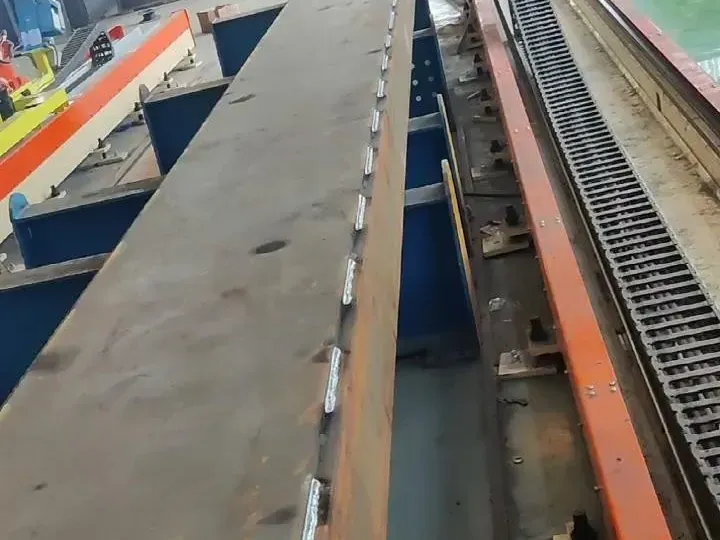
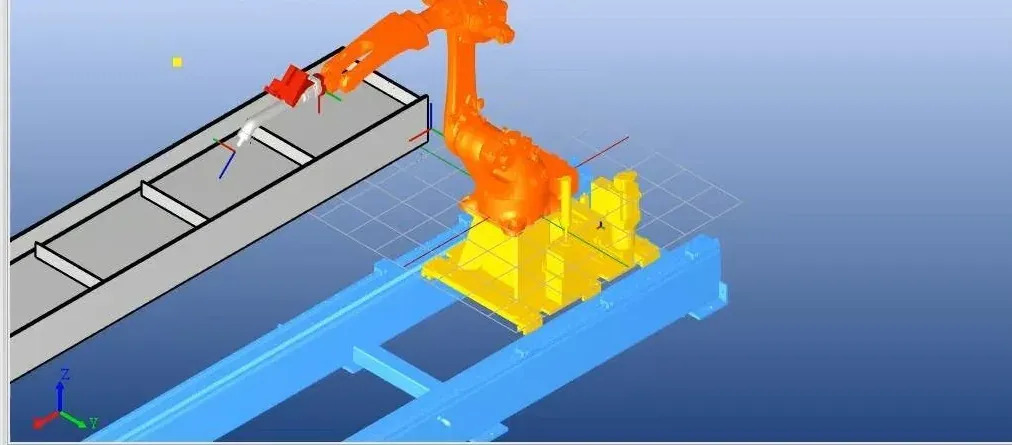
Separate the long main seams from the fittings and from full-penetration joints. Each welding process has a clear place in production; the rail-mounted gas-shielded robot handles the assembled member’s attachment welds.
| Operation | Welds | Equipment |
|---|---|---|
| Main seam welding | Long flange-to-web seams | H-beam gantry welder |
| Full-penetration welding | Root, fill and cap passes on box columns and H-beams | Submerged arc robot station |
| Fitting welding | Stiffeners, end plates, cleats and brackets | 7-axis rail-mounted gas-shielded robot |
How an H-beam welding line divides the work7-axis rail-mounted welding robotSubmerged arc welding robot
Export the assembled columns and rafters as STEP or IFC from your detailing software. Include the fittings and weld information, and keep the model consistent with the member placed on the station. The software extracts the seams and checks the robot’s path before welding.
At the station, the operator opens the model using the member’s QR code. A laser scan locates the part; the robot then travels along the rail, scans each seam and welds with arc tracking. Welded length is logged for each member.
A tapered member can have a flat web even though its depth changes. Check the geometry and the space around each fitting together; the robot needs room both to scan the seam and to approach it with the torch.
Questions to discuss when moving fitting welds from manual work to a robotic station.
Yes. It follows the assembled 3D model to weld the fittings on tapered members. A flat web and sufficient torch access are part of the check, along with the member’s width and stiffener geometry.
The two do different jobs. Your gantry welder makes the long main seams. The gas-shielded robot welds the stiffeners, end plates, cleats and brackets assembled afterwards.
The 7-axis rail-mounted layout is the starting point for columns and rafters. For wide, flat plate assemblies, look at the 8-axis cantilever layout. Full-penetration joints use the submerged arc station.
For assembled columns and rafters, prepare a STEP or IFC model. Flat web plates with stiffeners can also be scanned at the station. You can send drawings or photos for the first free evaluation.
Two robots can share one rail for long members. Send the longest rafter and its fittings so our engineers can review the layout and access to the welds.
Send a typical column and rafter from one building. Our engineers check the fittings and weld access, recommend a station and prepare a factory-direct quotation. We reply within one business day.