
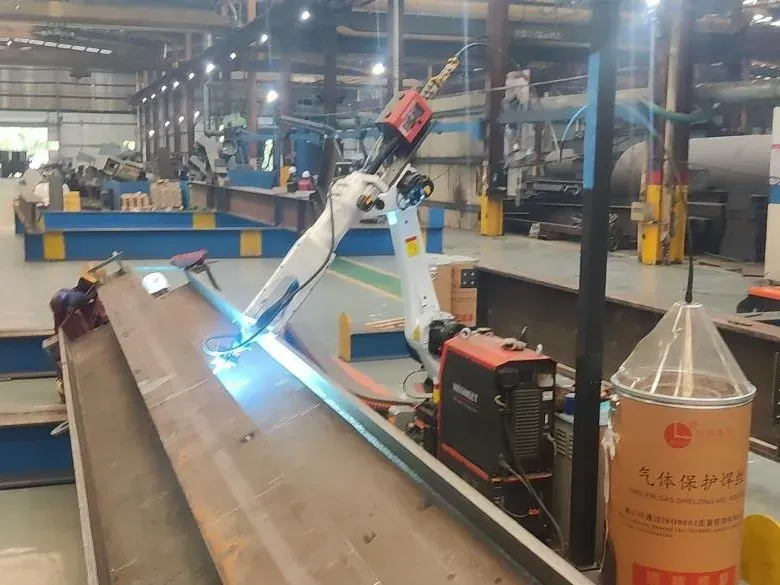
H-Beam Columns and Roof Beams
Use the 7-axis rail-mounted robot for members up to 1,500 mm wide, with stiffeners up to 600 mm high.
Applications
Find a welding robot by the steel part you make: beams, columns, attachments, bridge plates or 3D frames. Compare the layouts and size ranges, then send your part for a free evaluation.
Use the 7-axis rail-mounted robot for members up to 1,500 mm wide, with stiffeners up to 600 mm high.
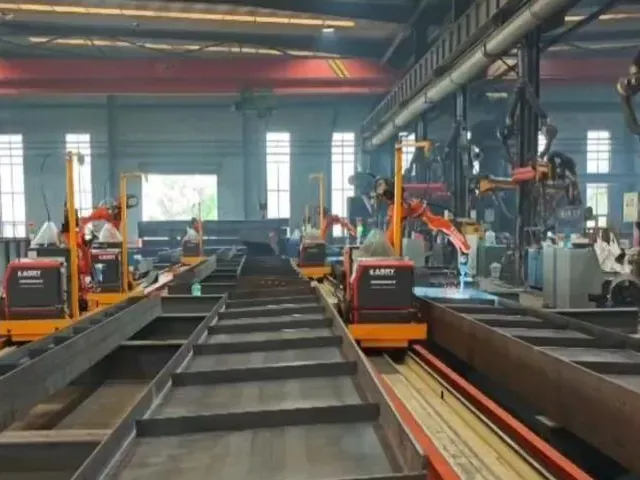
The 7-axis rail-mounted robot welds crane girders and runway beams.
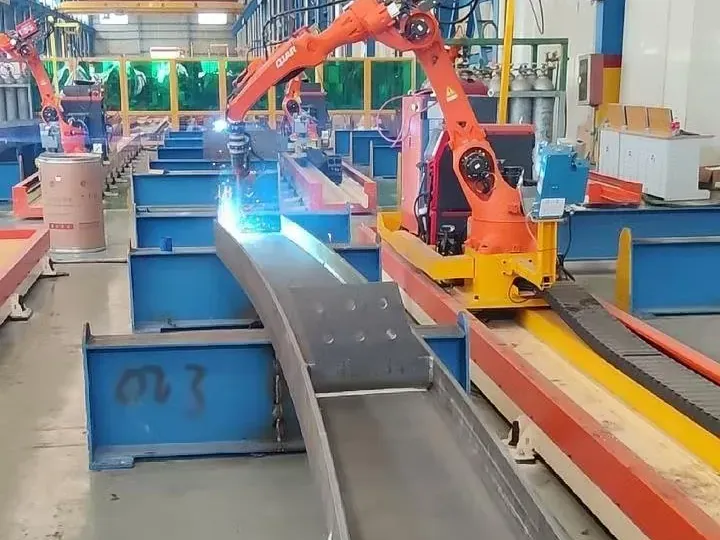
Weld planar arc and curved seams with the 7-axis rail-mounted robot. Free-curve joints have a minimum arc radius of 50 mm.
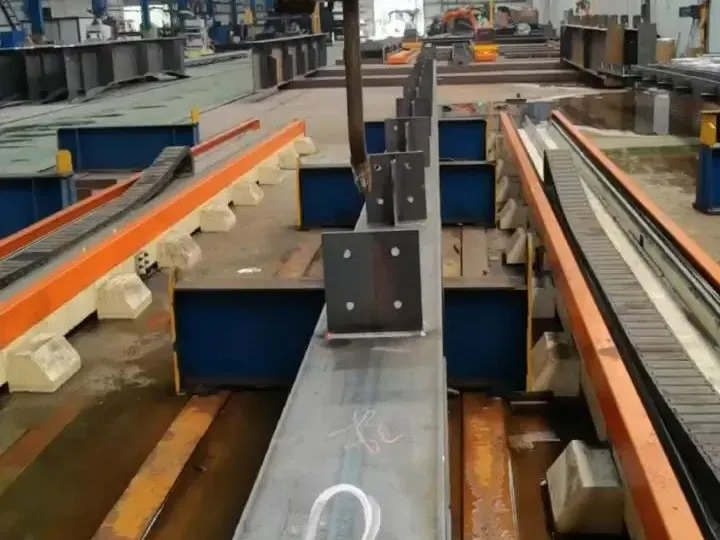
Weld fillet seams on corbels, purlin cleats, stiffeners and end plates from the part model.
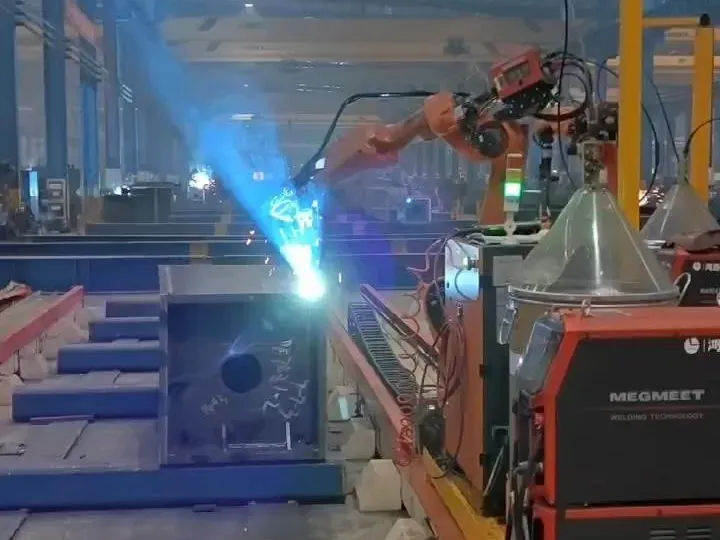
Gas-shielded welding joins attachments and fillet seams on box and cruciform columns. For long full-penetration seams on box columns, use the submerged arc station.
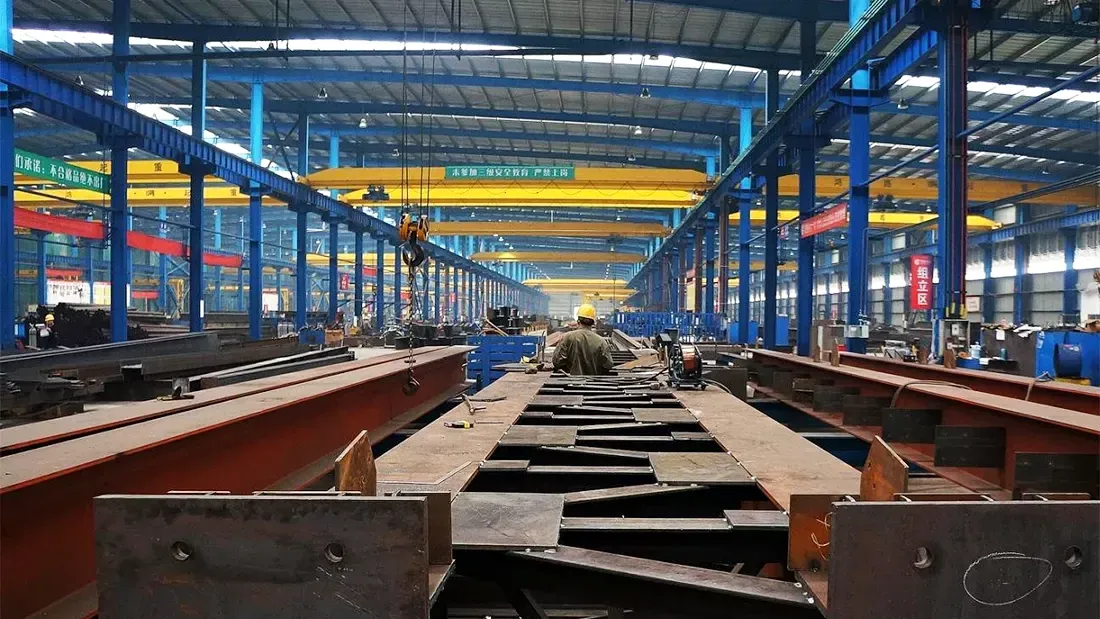
Our robots weld tapered PEB beams and columns, including end plates and stiffeners.
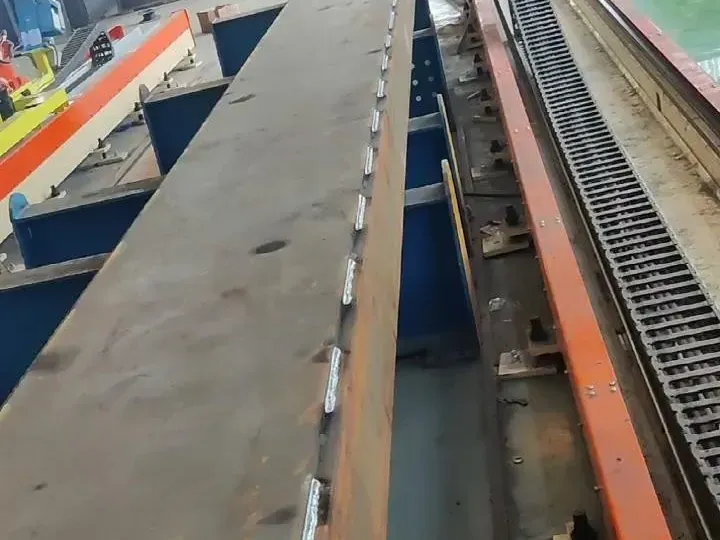
Intermittent welding reduces distortion on straight seams. Lap joints require an overlapping plate thickness of at least 8 mm.
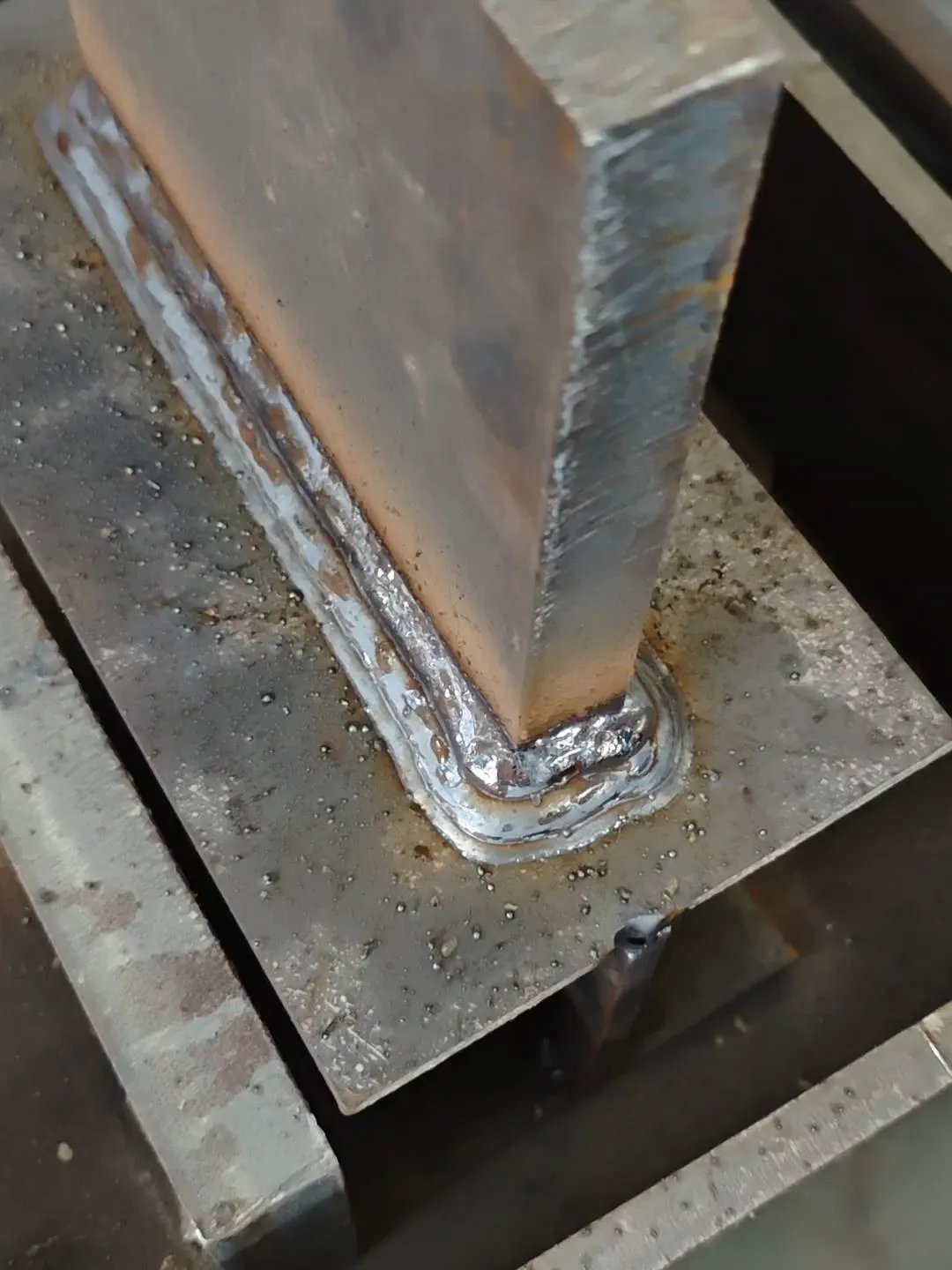
For 5–30 mm plates, weld legs over 10 mm use multiple layers and passes. The software generates each pass path automatically.
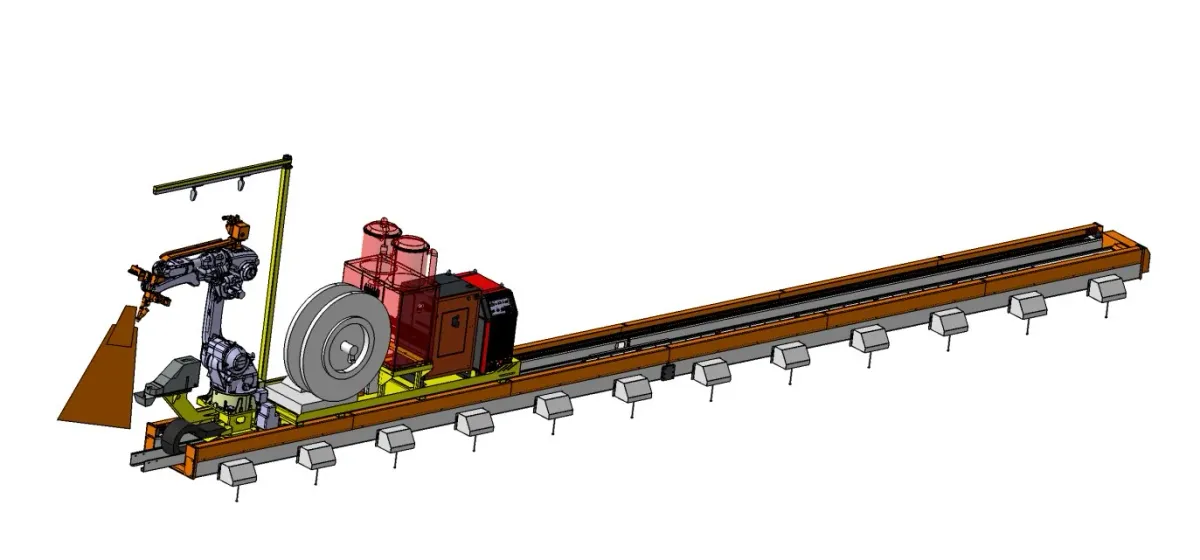
Use the submerged arc station for root, fill and cap passes on long full-penetration seams in box columns and H-sections, with single-wire or twin-wire versions.
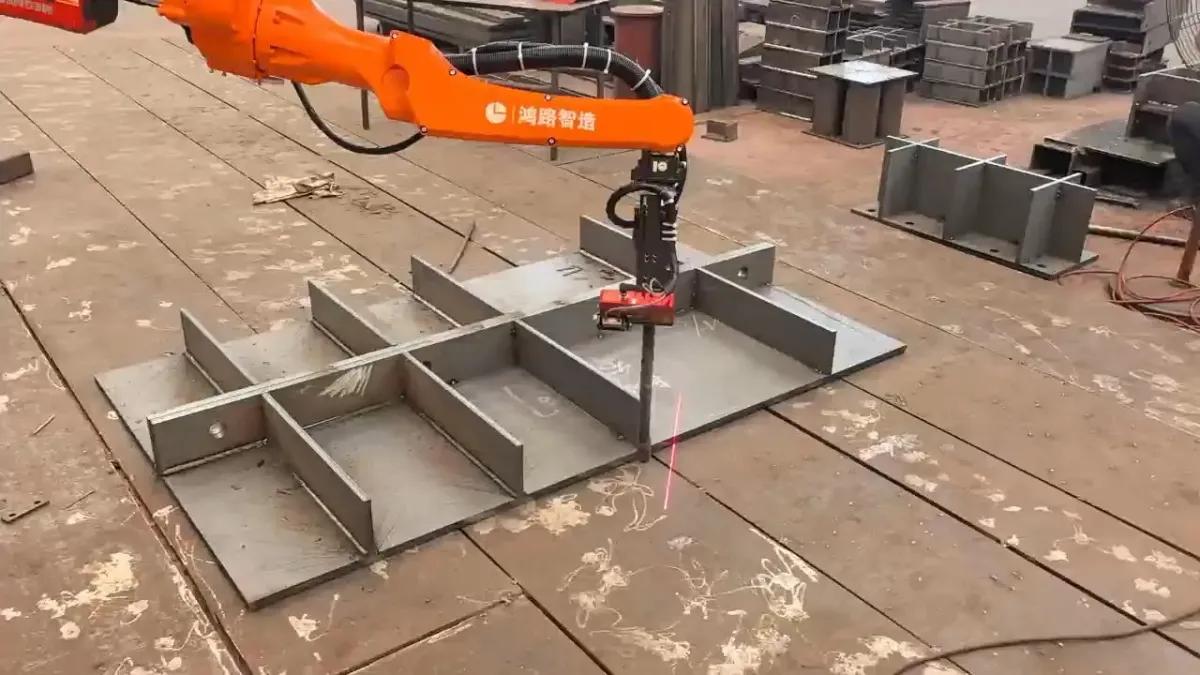
Use the 8-axis cantilever robot for bridge plate units and diaphragms up to 3,500 mm wide, with stiffeners up to 600 mm high.
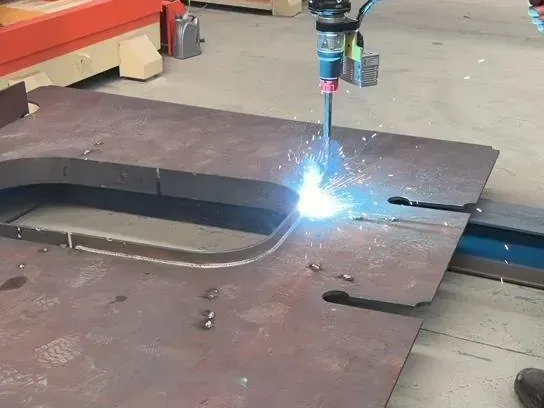
Weld long stiffeners and curved seams around openings in bridge plates. Check the minimum dimensions for circular and curved joints in the fit-up guide.
Use the 9-axis cantilever robot for 3D frames and box-shaped parts, such as equipment frames, up to 3,500 mm wide and 2,000 mm high.
| Robot Layout | Typical Parts | Size Range | Learn More |
|---|---|---|---|
| 7-Axis Rail-Mounted Robot | H-beam columns, roof beams and crane girders | Up to 1,500 mm wide; stiffeners up to 600 mm high | 7-Axis Rail-Mounted Robot |
| 8-Axis Cantilever Robot | Bridge plate units and diaphragms | Up to 3,500 mm wide; stiffeners up to 600 mm high | 8-Axis Cantilever Robot |
| 9-Axis Cantilever Robot | 3D frames and box-shaped parts | Up to 3,500 mm wide and 2,000 mm high | 9-Axis Cantilever Robot |
| Submerged Arc Station | Long full-penetration seams on box columns and H-sections | 12 m rail; 10 m effective travel | Submerged Arc Station |
Check part geometry, torch access, fit-up and joint sizes with the suitability checklist. Send drawings, a model or photos for a free part evaluation.
Our robots weld beams, columns, corbels, cleats, stiffeners, end plates, bridge plate units and 3D frames. Choose the layout by part geometry, size and weld type.
The 7-axis rail-mounted robot welds crane girders and runway beams.
Weld planar arc and curved seams with the 7-axis rail-mounted robot. Free-curve joints have a minimum arc radius of 50 mm.
Gas-shielded welding joins attachments and fillet seams on box and cruciform columns. For long full-penetration seams on box columns, use the submerged arc station.
Use the 9-axis cantilever robot for 3D frames and box-shaped parts, such as equipment frames, up to 3,500 mm wide and 2,000 mm high.
Send drawings, a model or photos of the parts you want to weld for a free part evaluation.